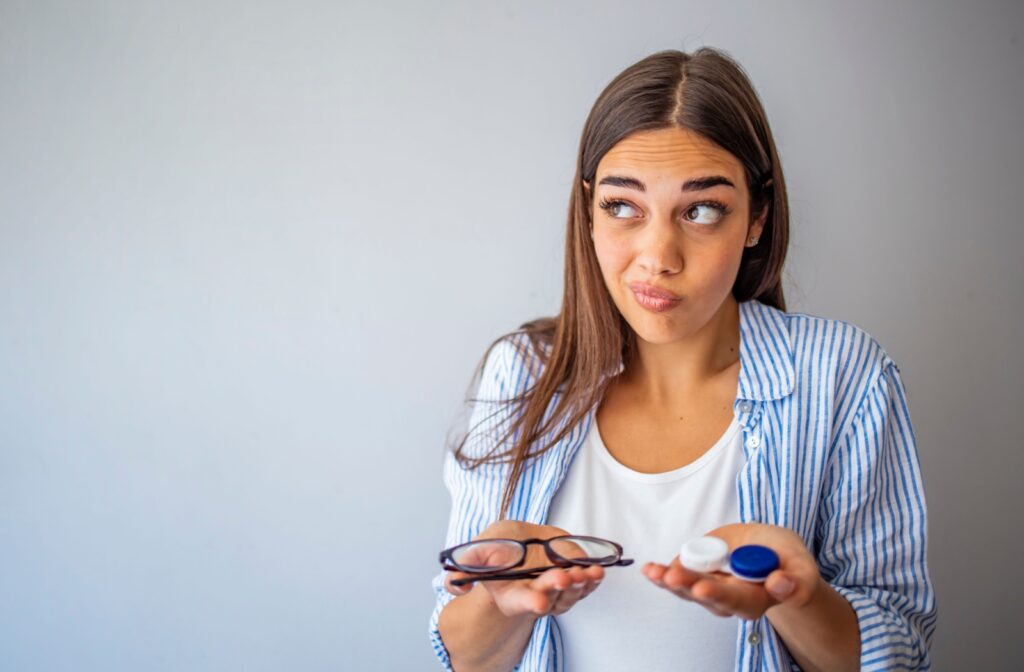
If you have a prescription for glasses, you might be tempted to use the same set of numbers to order contacts, too. But our team at Beyond 20/20 Optometry wants you to know you can’t always use the same prescriptions for contact lenses. It seems like it should be that simple, but the way each one corrects your vision is quite different.
No, your glasses prescription and your contact lens prescription are not the same. Using your glasses prescription for contacts can lead to blurry vision and discomfort.
Why Your Prescriptions Are Different
The Position of the Lens
Consider where your glasses sit. They rest on your nose, about 12 millimetres away from your eyes. Contact lenses, on the other hand, sit directly on the surface of your eyes. This small distance changes the power required to focus light correctly for your vision.
This difference in distance might seem minor, but it changes how the light focuses on its way to the back of your eye. Think of it like adjusting a camera lens to get a clear picture: A tiny turn makes a big difference.
Different Measurements for a Custom Fit
Contact lenses touch your eyes, so they need to be custom-fitted. A prescription for contacts includes specific measurements like the curve and width of the lens. These details help the lens fit your eye’s unique shape for safe and comfortable wear.
Without these measurements, a contact lens might be too tight, restricting oxygen flow to your cornea (the clear, outer layer of your eye). If it’s too loose, it could move around too much, causing irritation and blurry vision. This is why a precise fit is so important.
What Your Glasses Prescription Includes
Key Numbers and Letters
Your glasses prescription has all the information needed to create lenses for your frames. It typically includes:
- Sphere (SPH): The lens power needed for nearsightedness or farsightedness.
- Cylinder (CYL) and axis: These work together to correct the blur caused by astigmatism.
- Add: Additional power needed to view objects clearly at near by correcting presbyopia.
- Pupillary distance (PD): The distance between your pupils, which helps the optical centre of the lens sit directly in front of your pupil.
These numbers provide a picture for crafting lenses that are uniquely yours. This alignment is what gives you the clearest possible vision through your frames.
What Your Contact Lens Prescription Includes
Extra Details for Eye Health
A contact lens prescription contains some of the same information from your glasses prescription, plus a few key additions for a healthy fit. These extras usually include:
- Base curve (BC): This matches the curve of the lens to the curve of your cornea.
- Diameter (DIA): The width of the contact lens from edge to edge.
- Lens and brand material: Recommended by your optometrist and tailored for your eye needs.
The material of the contact lens is a big part of a contact lens prescription. Some materials allow more oxygen to reach your eyes, which is great for people who wear their contacts for long hours. Others are designed to hold more moisture, helping to prevent dry eye symptoms.
The Importance of a Proper Contact Lens Fit
More Than Just a Vision Test
A contact lens exam is separate from a standard eye exam. During this visit, the eye doctor can evaluate how the contact lens fits and moves on your eye. Our team can also check to see that your cornea is getting enough oxygen to stay comfortable.
This evaluation goes beyond a simple check for clarity. It’s a health check to see how your eyes are responding to wearing something directly on their surface. Follow-up appointments are also common to track your progress and make sure the contacts remain comfortable over time.
Find a Comfortable and Healthy Option
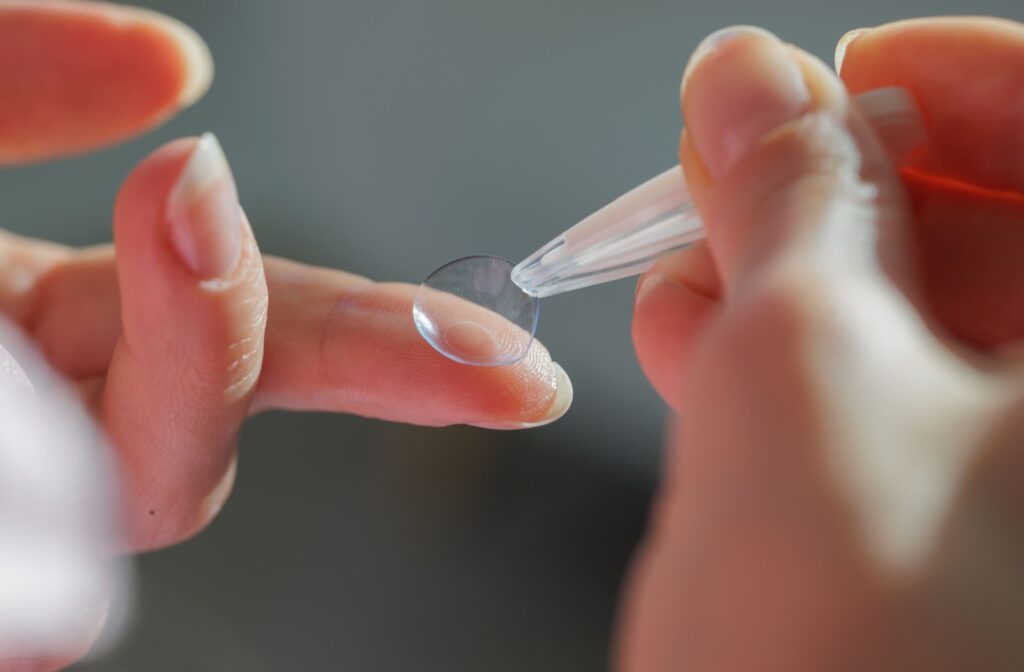
You may get to try on a pair of trial lenses to see how your contact lenses feel and how well you can see with them. A proper fit usually also includes instructions on how to insert, remove, and care for your lenses, helping you wear them comfortably and reducing the risk of eye infections.
Your Next Steps for Clear Vision
Explore Your Contact Lens Options
Once you have a prescription, you can explore different types of contact lenses, and your lifestyle can sometimes point you in the right direction. For example, daily disposables are convenient if you don’t want the hassle of cleaning them, while monthly lenses are good for those who need contact lenses every day.
There are also specialized lenses available. Toric lenses are designed for astigmatism, and multifocal contacts can help with both near and distance vision, similar to bifocal glasses. Our team can guide you through the choices that match your prescription and daily activities.
Talk to Your Optometrist
If you’re interested in wearing contact lenses, the first step is to talk with your eye doctor. You can discuss your lifestyle and vision needs to determine if contacts are a suitable choice for you.
Begin Your Contact Lens Journey
Our team at Beyond 20/20 Optometry can answer your questions and help you explore all your eye care options. Schedule your contact lens fitting to find a clear and comfortable vision solution that works for you.