Key Takeaways
- Eye strain happens when your eyes work hard for too long without a break.
- Symptoms often clear up within a few hours of rest.
- Strain that returns daily may point to dry eye, an outdated prescription, or another underlying cause.
- Simple habits like the 20-20-20 rule can bring real relief during screen-heavy days.
- A full eye exam can help identify what’s actually going on if symptoms keep coming back.
You’ve made it through a long day of staring at a screen, and now your eyes feel heavy, your temples are throbbing, and your vision looks a little soft around the edges. Sound familiar? Eye strain is something most people run into at some point, and it can leave you wondering how long you’re going to feel this way. Beyond 20/20 Optometry sees this regularly in people of all ages, from kids on tablets to adults working long hours at a desk. If you’ve been noticing these symptoms more often, understanding what’s behind them is a helpful first step.
Eye strain typically clears up within a few hours with proper rest, but if it keeps coming back day after day, that’s a sign that something else may be going on.
What Is Eye Strain?
Your eyes constantly work to maintain focus, especially during tasks like reading, driving, or scrolling through a screen. When you push through those tasks for a long stretch without a break, the muscles that control your focus get tired. That tiredness is what most people know as eye strain.
It can happen to anyone, even people with perfectly healthy eyes and an up-to-date glasses prescription. Think of it like your legs feeling sore after a long walk. The discomfort is real, but it usually passes with a little rest.
What Eye Strain Feels Like
Signs to Watch For
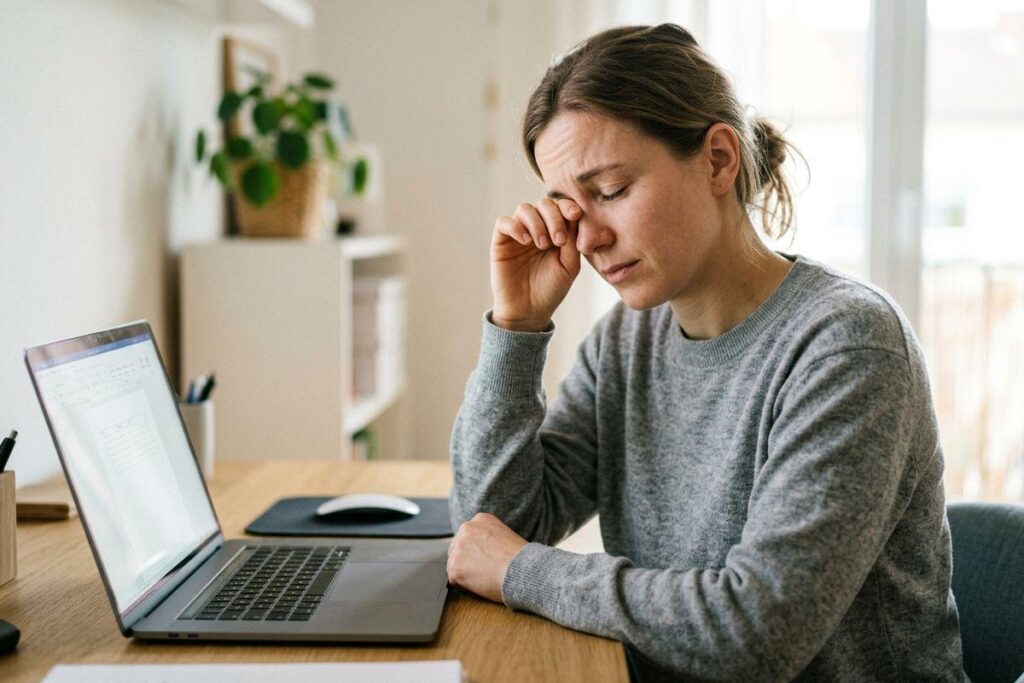
Eye strain doesn’t always look the same from person to person. Common signs include:
- Tired, dry, or watery eyes
- Blurred vision or headaches near the temples
- Neck and shoulder tension

If you’ve been at your desk all afternoon and start feeling that familiar tight pressure behind your eyes, there’s a good chance eye strain is the reason. Catching these signs early gives you a chance to rest before things get worse.
What Can Be Mistaken for Eye Strain
Some conditions feel a lot like eye strain, but don’t go away with a quick break. Dry eye disease, for example, shares many of the same symptoms, like irritation, blurry vision, and fatigue, but the discomfort tends to linger much longer than a few hours. An outdated glasses prescription can also cause constant strain, as your eyes are always working harder than they should to bring things into focus.
If rest doesn’t seem to help, or if your symptoms feel more persistent than what a screen break can fix, it may be worth looking into whether something else is involved. Accommodative dysfunction is another condition that can closely mimic eye strain, especially during near work like reading or screen use.
How Long Does Eye Strain Last?
Short-Term Relief
For most people, eye strain eases up fairly quickly once the demanding activity stops. Taking a screen break, getting outside, or simply closing your eyes for a few minutes can help your eyes feel more like themselves within an hour or two. Sleep is one of the most effective forms of recovery, and many people wake up the next morning feeling completely fine.
When It Sticks Around Longer
If your discomfort lasts for days or if it recurs every single day, that pattern is worth paying attention to. Underlying factors, such as dry eye or a change in your vision, can make strain feel much more persistent. Ignoring those signals often leads to more frequent flare-ups, so it’s better to look into what’s happening sooner rather than later. A comprehensive eye exam can help identify exactly what’s driving that pattern.
Simple Ways to Ease Eye Strain
The 20-20-20 Rule
One of the easiest habits you can build into your day is the 20-20-20 rule. Every 20 minutes, look at something about 20 feet away for 20 seconds. It gives your focusing muscles a short reset, almost like a stretch break for your eyes. It takes almost no time, and it can make a real difference by the end of a long workday.
Small Adjustments That Can Help
A few simple setup changes can also reduce how much strain you feel throughout the day. Try these:
- Position your screen at arm’s length, slightly below eye level
- Make a conscious effort to blink more often, especially during focused tasks
- Use preservative-free lubricating drops if you’re in a dry environment
These aren’t complicated changes, but they add up. Blinking more often keeps your eyes from drying out during long screen sessions, and the right screen distance reduces how hard your eyes have to work to stay focused.
When to See an Eye Doctor in Moncton
Rest and simple habits go a long way, but they’re not always enough. If eye strain is becoming a daily experience for you or someone in your family, that’s a good reason to schedule a full eye exam. An exam can uncover things like dry eye disease, myopia, or a prescription that no longer fits your needs, any of which can make strain feel like a constant part of your day.
Adults benefit from having their eyes checked at least every 2 years, and children may need more frequent visits as their vision changes. Staying on top of eye care in Moncton means you can catch these issues early, often before they affect your daily comfort or your child’s ability to focus at school.
Our team at Beyond 20/20 Optometry is here to help you figure out what’s behind your symptoms and find practical ways to feel better. If eye strain has been bothering you or your family, booking an eye exam is a great place to start.