
After a head injury, you might focus on headaches, memory, or balance. But what happens when you notice words on a page look fuzzy, or bright lights feel overwhelming? It’s common to overlook vision problems, but they are often connected to how your brain is recovering. In fact, many people find that a concussion can change their vision in unexpected ways.
Your ability to see clearly depends on a strong connection between your eyes and your brain. Because vision is a brain process, an injury to your brain can directly affect your sight and how you interpret the world around you. Understanding this link is the first step toward getting the right support.
How Your Brain and Eyes Work Together
Your Eyes Capture Information
Think of your eyes like cameras. They capture light and focus it onto a surface called the retina at the back of your eye. This information is then converted into signals that are ready to be sent to your brain for processing. Then your brain creates the sharp images you see.
Your Brain Processes What You See
Your brain does the heavy lifting. It receives the signals from your eyes and gets to work making sense of them. A specific part of your brain sorts through these signals, turning them into the meaningful images you recognize, like a loved one’s face or the words in a book. This is known as visual perception.
Common Vision Symptoms After a Head Injury
When the brain-eye connection is disrupted, you might notice new challenges with your sight. These symptoms can show up right away or appear weeks later as you return to your normal activities. While these vision problems after a concussion are often temporary, they can affect your daily life. Some common signs include:
- Blurry or double vision: Words on a screen or objects across the room may seem out of focus or appear as 2 separate images.
- Light sensitivity: You might feel discomfort or get headaches from bright sunshine or even the fluorescent lights at the grocery store.
- Visual motion sensitivity: You may have symptoms of dizziness or nausea when you look at a moving object or scroll on a screen.
- Eye strain or headaches: Your eyes may feel tired, sore, or achy after short periods of reading, computer use, or other visual tasks, much like digital eye strain.
Other Visual Challenges You Might Notice
Problems with Eye Movement
Your brain is in charge of telling your eyes where to look and how to move together as a team. After an injury, you might find it difficult to control these movements, which can be a sign of binocular vision dysfunction. You may notice you have a hard time following a moving object or that you frequently lose your place while reading a paragraph.
Changes in Perception
Beyond seeing clearly, your brain also helps you understand where objects are in relation to you. You might struggle to judge distances correctly, making it tricky to walk down stairs or park your car. You could also lose awareness of things in your peripheral (side) vision.

What to Expect During an Eye Exam
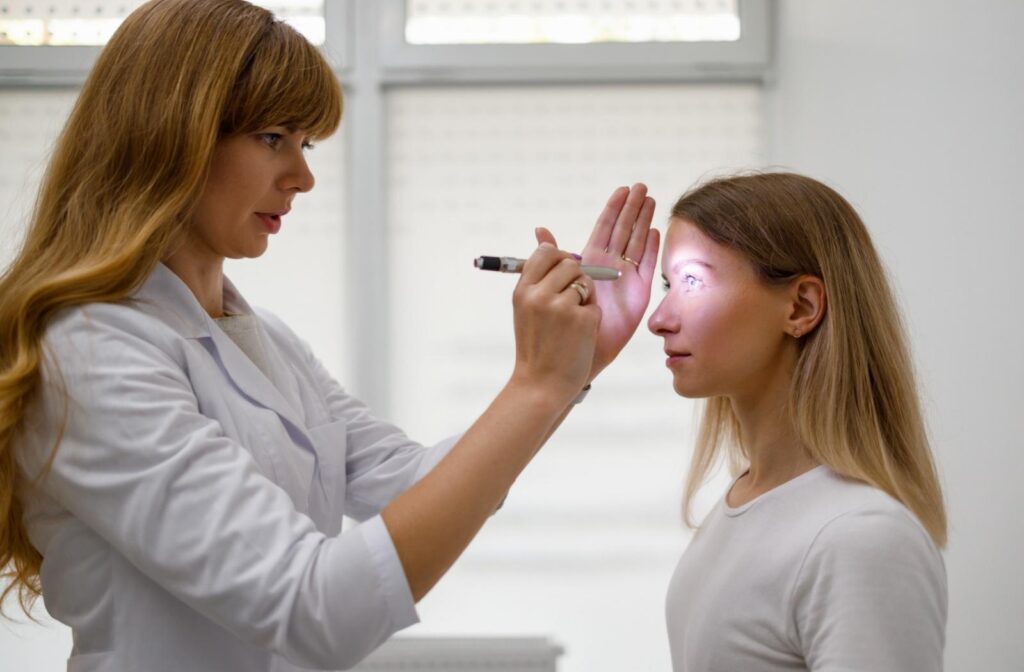
If you are experiencing any of these symptoms, a comprehensive eye exam can help identify potential visual issues related to a brain injury. During this initial visit, which is typically around 30 minutes, your optometrist will assess more than just your ability to read an eye chart and evaluate how your entire visual system is functioning.
If visual deficits are detected, a more in-depth assessment will be recommended to better understand the root cause of your symptoms. These extended evaluations are approximately 2.5 hours in length and allow us to gather more detailed information before providing personalized treatment recommendations.
During your assessment, some things our team will do include:
- Review your health history to understand your injury and symptoms.
- Perform specialized tests to see how well your eyes coordinate and focus.
- Complete a check of all your visual skills, like depth perception and tracking.
- Discuss personalized options for your neuro-visual rehabilitation.
Options to Support Your Visual System
Specialized Lenses and Tools
Sometimes, a new pair of glasses with a specialized prescription can provide relief. Therapeutic lenses are designed for specific tasks, like computer use, to reduce eye strain. Other tools, like prisms, can help your brain merge 2 images into one if you are experiencing double vision, while special tints can reduce the discomfort from bright lights.
Coordinated Vision Therapy
Vision therapy is a personalized program of activities designed to help improve the communication between your brain and your eyes. It doesn’t work your eye muscles; it helps retrain your brain to coordinate your eyes more efficiently. This can help you read more comfortably, improve your coordination, and make daily tasks feel easier again.
We Are Here for You
You don’t have to navigate vision problems alone. Our team at Beyond 20/20 Optometry can help you understand your symptoms and find a path forward. Book a comprehensive eye exam to explore how to support your vision and improve your quality of life.